


Introduction
You can have your product ready, your invoices lined up, and your first customers waiting. Then GST registration hits a simple question that can slow everything down.
What is your principal place of business, and can you prove you have the right to use that address?
This is where virtual office addresses become a practical option. They can help you move faster, look more credible, and keep your home address private. But they also come with avoidable risks, mostly around documentation and verification readiness.
This guide explains how a virtual office address works for GST registration in India, what benefits you actually get, what can go wrong, and the best practices that help you get approved smoothly.
Quick Answer: A Virtual Office Can Work For GST If The Address Is Verifiable And Properly Documented
A virtual office address can be used for GST registration when the premises is real, traceable, and supported by the right documents for your “nature of possession” selection.
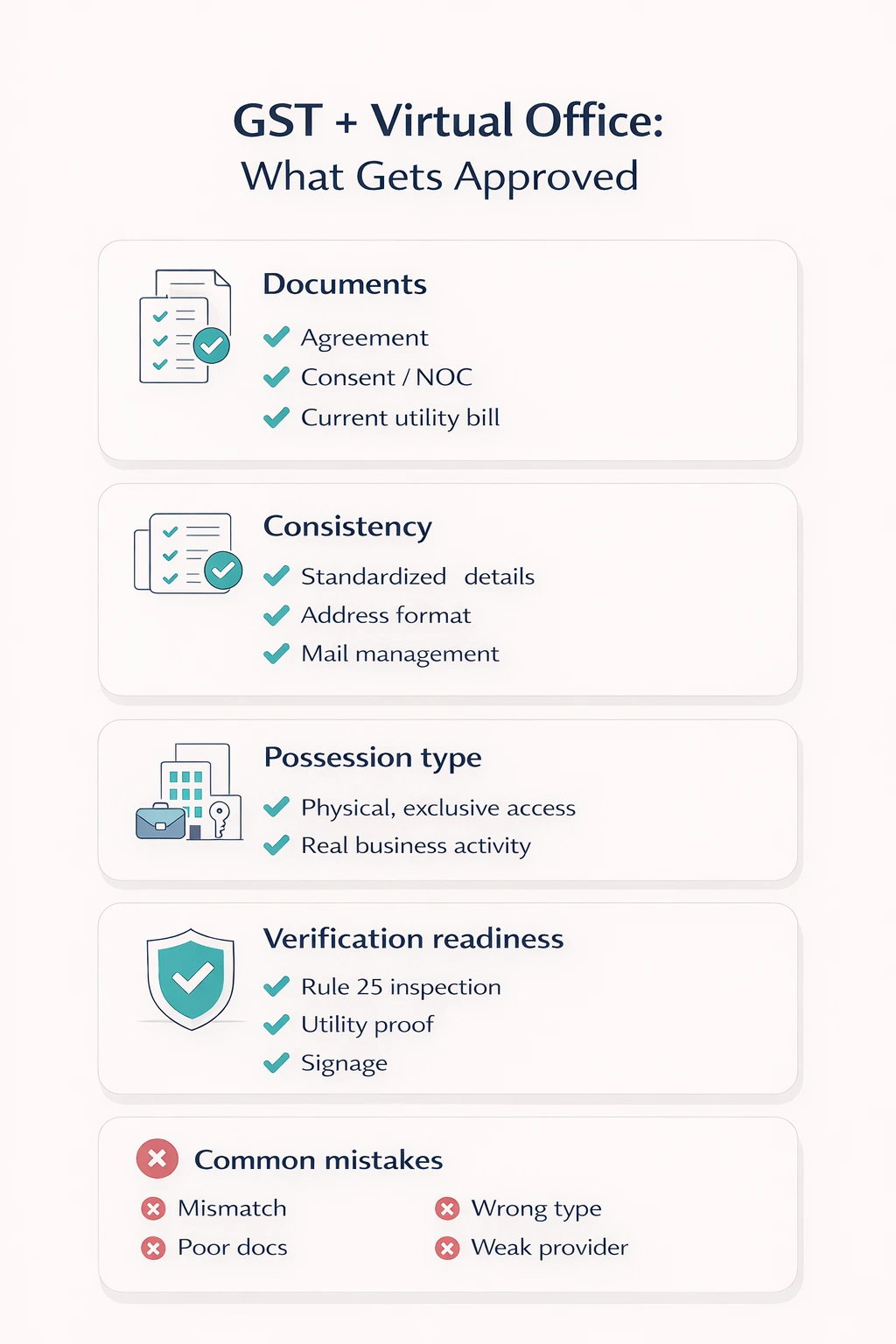
GST approval is not about whether an address is premium. It is about whether the address is valid on paper, consistent across your application, and verifiable when required.
The common failures are not “virtual office is illegal”. The common failures are mismatched address formats, weak permission proofs, and incomplete uploads.
GST Address Requirements In Simple Terms
Principal Place Of Business Vs Additional Place Of Business
Most businesses register one address as the principal place of business. If you operate from more than one location, you can add additional places of business.
From a GST registration standpoint, you must submit address proof for the place you are registering. The GST registration document checklist lays out commonly accepted proofs for the principal place of business and for any additional places.
What Officers Look For During Document Checks
In practice, the officer is trying to confirm four things quickly.
-
The address exists and is identifiable.
-
Your right to use the address is supported by suitable documents.
-
The details in your application match the details in your uploaded proofs.
-
The files are clear and complete.
CBIC Instruction No. 03/2025-GST also reinforces that officers should adhere to the indicative document list in FORM GST REG-01 and avoid unnecessary extra document demands beyond what is prescribed.
Benefits Of Using A Virtual Office Address For GST Registration
Faster Go To Market With A Ready Compliance Address
If your biggest goal is to start billing quickly, a virtual office can remove typical delays like lease negotiations, landlord approvals, and office setup. As long as the provider supplies a compliant documentation pack, you can proceed without waiting months to finalise a physical office.
Better Business Credibility For Clients And Vendors
A professional commercial address can improve confidence when you deal with clients, vendors, banks, and marketplaces. It also keeps business correspondence separate from your personal life, which matters once you scale.
Easier Expansion Across Cities
A virtual office model supports growth when you need a presence across cities without committing to full offices everywhere. It is especially useful when your team works remotely, but your compliance and correspondence still need a stable address.
Privacy And Separation From Home Address
Using your home address for GST can be uncomfortable, especially when you consider public records and official communications. A virtual office helps keep your personal address out of day to day business paperwork.
Risks And Rejection Triggers You Should Know
Address Mismatch Across Documents
This is one of the most common reasons people get clarification notices.
Small inconsistencies, like missing floor numbers, different building names, or incorrect pin codes, can trigger queries. Decide one clean address format and use it everywhere, on the agreement, the consent letter, the utility bill, and the GST application.
Wrong Nature Of Possession Selection
During GST registration, you must select how you are using the premises, such as owned, rented, or consent.
If you select one category but upload documents that align to another category, the application can look inconsistent. The CBIC instruction is useful here because it pushes for standardised document checks aligned to the prescribed list.
Weak Or Incomplete Address Proof Pack
The GST document checklist clearly indicates typical proofs like electricity bill, rent or lease agreement, consent letter, and similar documents based on the type of possession.
If your provider cannot give you a clean right to use trail plus supporting premises proof, do not assume you can “manage it later”. Fixing weak paperwork after a query usually costs more time than choosing the right provider up front.
Clarification Notices And Slow Replies
When you receive a clarification request, time matters.
Applicants lose time when they respond late, upload irrelevant documents, or do not address the exact mismatch highlighted by the officer. A simple habit helps, keep a ready folder with clean PDFs and a consistent address format before you submit the application.
Physical Verification Anxiety And What To Do About It
Physical verification can happen in certain cases, before or after registration.
Under Rule 25, the verification report along with photographs is uploaded in FORM GST REG-30 on the common portal, within the specified timelines.
If you are using a virtual office, the best approach is not to panic. Choose a provider that is verification-ready, and keep your documents and address consistency tight.
Best Practices Checklist For A Smooth GST Approval
Keep A Complete Document Pack Ready Before You Apply
Use the GST registration document checklist as your base reference for the type of proofs typically accepted.
For a virtual office GST application, your pack should usually include:
-
A right to use document, such as an agreement or service contract that clearly allows you to use the address.
-
A permission document, such as a consent letter or NOC, depending on the structure of the premises usage.
-
A supporting premises proof, such as a utility bill or another acceptable proof listed in GST guidance.
-
Clean, legible uploads that match your application entries.
Get The Consent Letter And Permission Trail Right
If your address proof relies on consent, the consent letter should match your application details perfectly.
-
Use the same address format as the GST application.
-
Mention your legal entity name exactly as per PAN and incorporation documents.
-
Ensure the signer details are consistent, and the document is properly signed.
-
Avoid vague permissions. The letter should clearly state you are permitted to use the premises for GST registration and business correspondence.
Use One Standard Address Format Everywhere
This single practice prevents a large percentage of GST queries.
-
Include floor, unit number, building name, street, locality, city, and pin code.
-
Do not switch between short and long versions of building names.
-
Keep punctuation and spacing consistent across every file and form entry.
Upload Quality Matters More Than People Think
Officers process hundreds of applications. Make yours easy to approve.
-
Use clear scans, not glare-heavy photos.
-
Combine multi-page documents into a single PDF.
-
Keep file sizes within portal limits.
-
Name files clearly, so the document purpose is obvious.
Know How To Respond If You Get A Clarification Notice
If you receive a clarification request, respond with focus.
-
Read the specific mismatch highlighted.
-
Upload only the documents that solve that mismatch.
-
Fix address consistency issues, then re-upload.
-
Reply promptly, with clear files.
For portal process steps, the GST tutorial guide on applying for registration is a useful reference.
Physical Verification Under GST: What Actually Happens
Physical verification is not a judgement on your business. It is a risk control step that may be triggered by profile factors, Aadhaar authentication issues, or officer discretion.
Rule 25 provides the basis and also specifies that the verification report with documents and photographs is uploaded in FORM GST REG-30.
If you are using a virtual office address, your practical checklist is:
-
The premises should be locatable and operational.
-
The provider should be able to confirm your arrangement if asked.
-
Your submitted documents should match your application details exactly.
How To Choose A Compliant Virtual Office Provider
A virtual office is only as good as the compliance pack behind it.
Minimum Must Have Deliverables
-
A clear right to use agreement.
-
Permission documentation where required.
-
Supporting premises proof aligned to GST expectations.
-
A reliable mail handling process, with timely notifications.
-
Verification readiness, meaning the provider knows how to support a legitimate verification request.
Red Flags To Avoid
-
Refusal to share redacted sample documents before purchase.
-
Promises of guaranteed approval without checking your profile.
-
Unclear ownership or permission trail.
-
No clear explanation of mail handling and verification support.
Next Steps With Xporate
If you want to do this once and do it correctly Xporate is designed to take you from “Is this address acceptable for GST?” to “Here’s the exact document pack and process that reduces rejection risk.”
Option 1: Start with the India-wide playbook (best if you’re still deciding)
Begin with Xporate’s main Virtual Office for GST Registration in India guide. It helps you:
-
Understand what GST officers actually evaluate for a “place of business”
-
See what a compliant document pack typically includes (right-to-use + consent/NOC + premises proof)
-
Avoid common rejection triggers like address formatting mismatch and wrong nature of possession
-
Learn how verification works in real life and what “verification-ready” providers do differently
-
Decide whether you should use a virtual office as principal place of business or as an additional place
Use this path if: you’re comparing cities, you’re unsure whether a virtual office is right for your case, or you want a clear “approval-first” checklist before you buy anything.
Option 2: Go directly to your city hub (best if you know where you need GST)
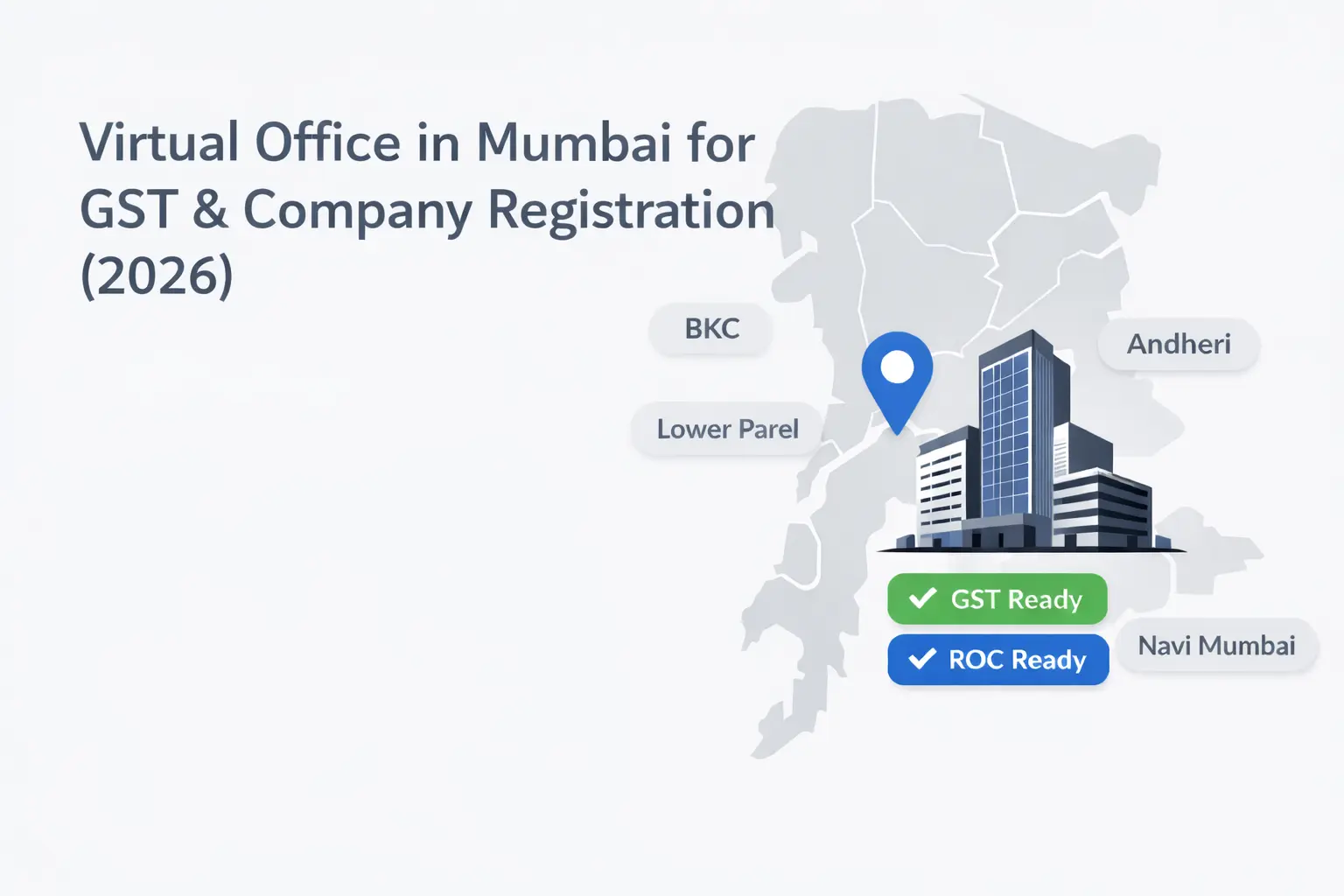
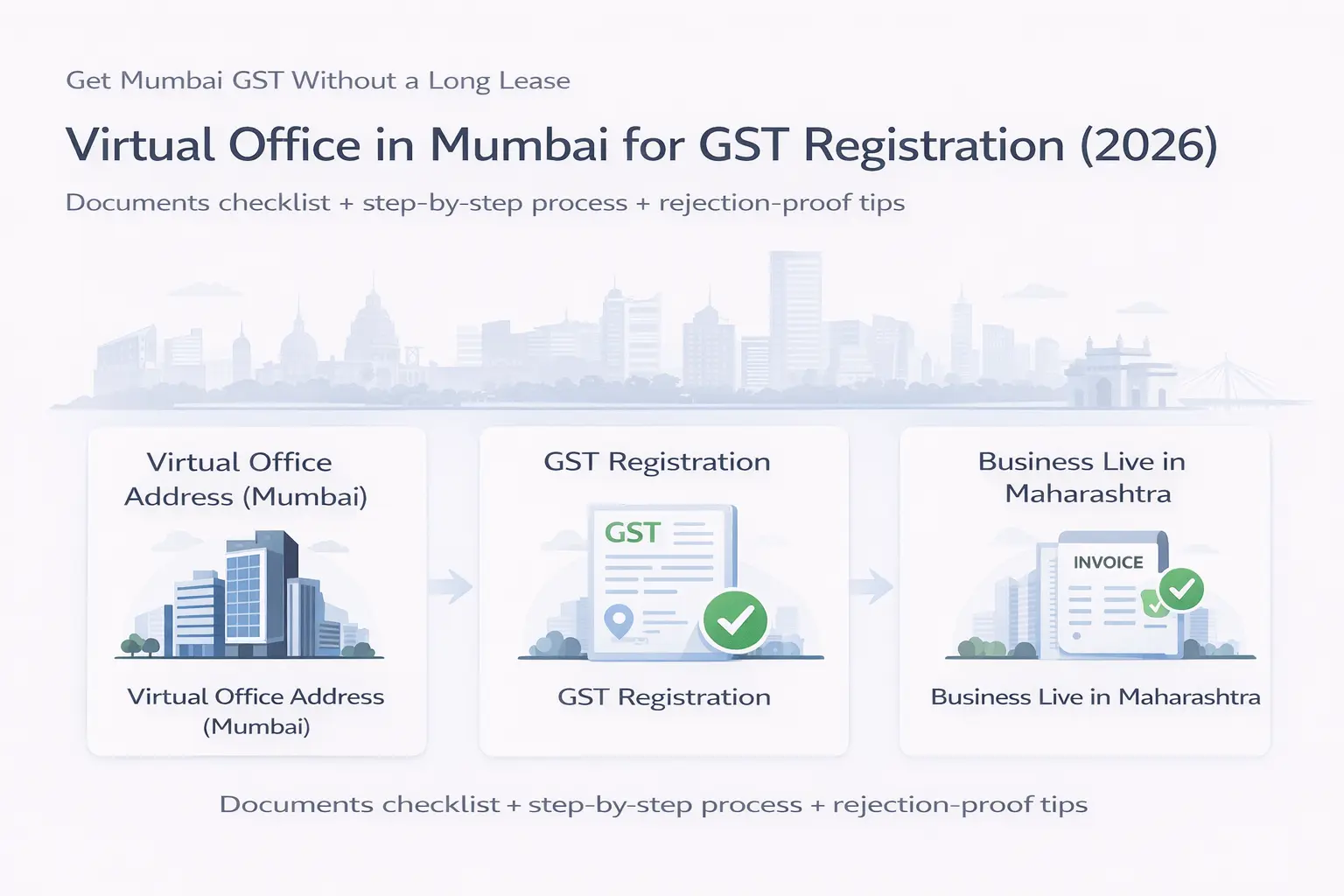
If you already know your city, go straight to the relevant Xporate city hub (Delhi / Gurgaon / Bangalore / Mumbai). These pages are built to help you move from decision → execution, with:
-
City-specific address options that are structured for compliance (not “address-only” setups)
-
Clear guidance on what you’ll receive (agreement + consent/NOC + supporting premises proof)
-
Mail handling expectations (how notices are received, alerted, and forwarded)
-
Practical notes on avoiding delays—especially around address standardisation and document naming/uploads
-
A simple next-step CTA to help you choose the right plan and start documentation quickly
Use this path if: you’re ready to apply for GST, want an address that can support document checks and verification, and prefer a city-specific workflow.
A quick way to choose the right route
-
Not sure which city or setup fits? → Start here
-
City finalised and you want to apply soon? → Go to your city hub
Xporate’s goal is simple help you use a virtual office address in a way that is verifiable, document-complete, and consistent, so your GST registration doesn’t get delayed over preventable paperwork issues.
Frequently Asked Questions
Is A Virtual Office Address Accepted As Principal Place Of Business For GST?
It can be accepted if the premises is verifiable and you submit correct proof of your right to use the address, aligned with the GST document checklist.
Which Address Proofs Are Typically Accepted For GST Registration?
Common proofs include electricity bill, property tax receipt, municipal khata copy, rent or lease agreement, and consent letter, depending on your possession type.
Will GST Officers Visit A Virtual Office For Verification?
Verification may happen in certain cases. Rule 25 provides that verification reports with photographs are uploaded in FORM GST REG-30 within specified timelines.
Does A Registered Rent Agreement Matter?
Instruction 03/2025-GST provides guidance on document sufficiency for registered vs unregistered rent or lease agreements, and discourages unnecessary demands when listed documents are provided.
What Is The Biggest Reason Virtual Office GST Applications Get Rejected?
Usually not the concept of a virtual office, but mismatched address details, incorrect possession category selection, incomplete proofs, or unclear uploads.
Can I Change My GST Address Later If I Move?
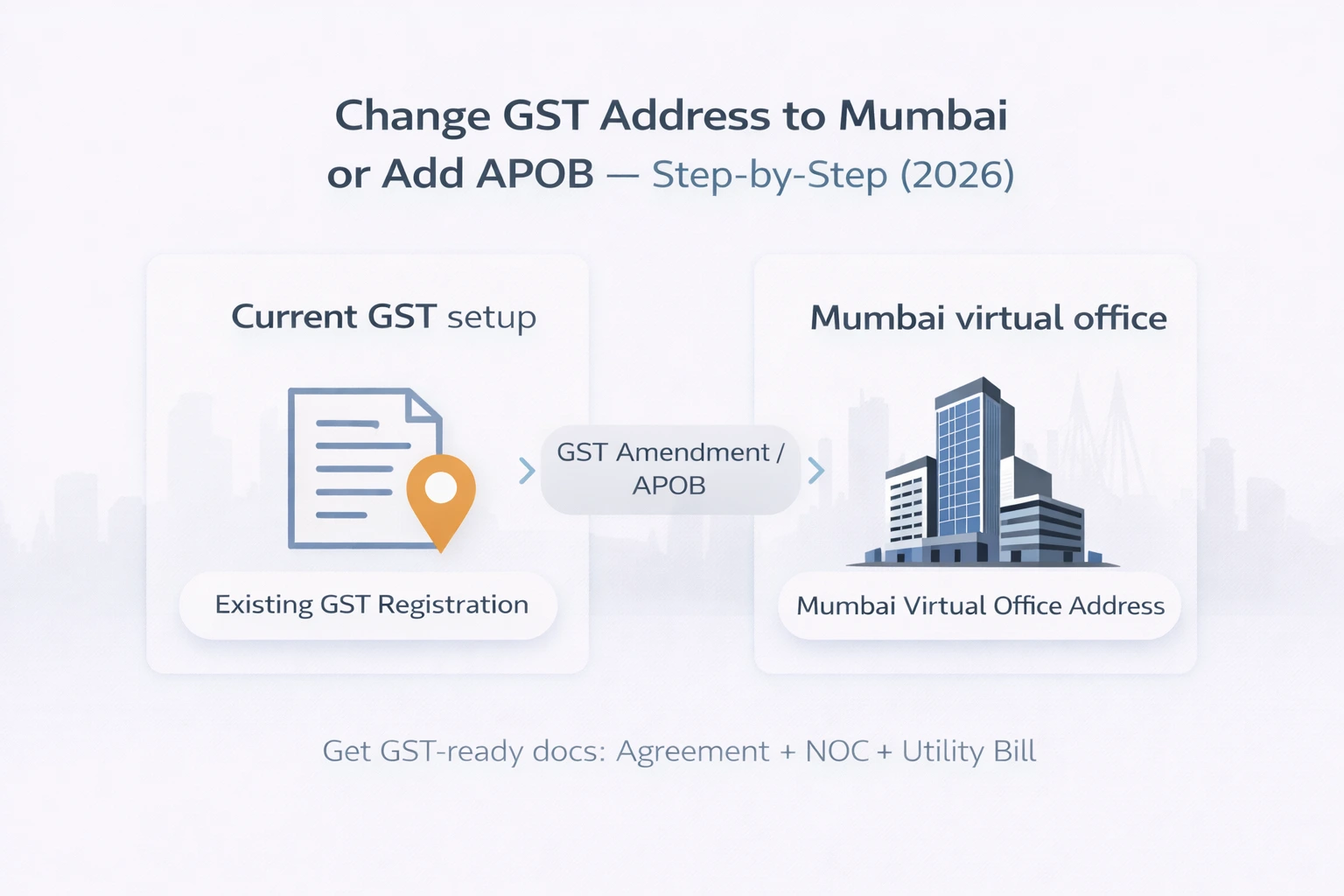
Yes, GST registrations can be amended, but it is better to choose a stable, compliant address early to avoid operational disruptions.
Is A Virtual Office Useful For E-Commerce Sellers Needing GST?
It can be, especially when you need a professional address for compliance and correspondence while keeping operational costs controlled.
How Do I Reduce Clarification Notices?
Use one consistent address format, select the correct nature of possession, upload legible proofs, and ensure the document pack is complete.